Is Riesling Sweet or Dry? A Buyer's Guide to Every Style
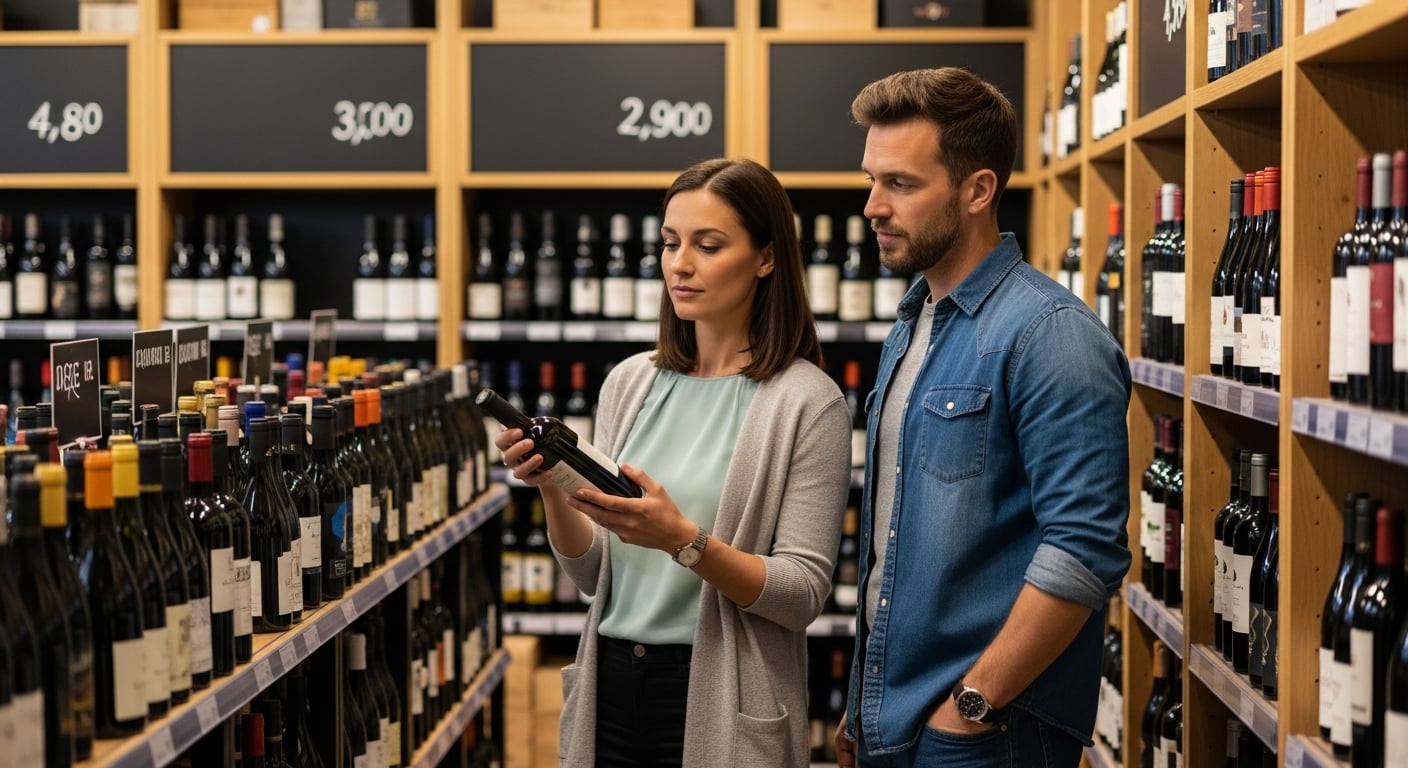
Riesling produces everything from razor-dry, mineral whites to luscious dessert wines — and one quick trick tells you which style you're holding before you open the bottle. This guide gives you that trick, the handful of label words that actually matter, a CorkType cheat sheet so you know exactly what to buy, and the food pairings that make Riesling one of the most versatile wines on the planet.
> A note on wine rules: Wine classification laws — German, Alsatian, Austrian, Australian, you name it — get tweaked all the time. Rather than memorize legal thresholds that may shift by the time you read this, we focus on the practical buying cues that stand the test of time, no matter which country or vintage you're shopping.
The 30-Second Shortcut: Check the ABV
Yeast turns grape sugar into alcohol. So a Riesling's ABV tells you roughly how much sugar was fermented away — and how much sweetness remains [1]. This is a strong rule of thumb for the vast majority of bottles you'll find on a shelf, though a small number of producers use techniques like back-sweetening (in German, Süssreserve) that can break the pattern [1].
> Heads up — this shortcut is Riesling-specific. The ABV-to-sweetness relationship below works because Riesling is unusually transparent about its residual sugar. Don't apply this table to Chardonnay, Sauvignon Blanc, or any red wine — most other varieties are fermented fully dry regardless of ABV, and a 12% Chardonnay tells you nothing about sweetness.
| ABV on the label | What to expect |
|---|---|
| 12.5% or higher | Dry — crisp, no perceptible sweetness |
| 11–12.4% | Off-dry — a hint of sweetness, balanced by acid |
| 9–10.9% | Lightly sweet — refreshing, think Kabinett |
| 8–8.9% | Noticeably sweet — classic low-alcohol Mosel territory (sweet Kabinett, Spätlese, Auslese) |
| Under 8% | Dessert-level — honeyed and rich (Beerenauslese, Trockenbeerenauslese, Eiswein) |
<p style="text-align: center; font-size: 0.875rem; color: #666; font-style: italic; margin: -1.25rem 0 1rem;">Table 1. Riesling ABV Shortcut to Style and Sweetness.</p>
Some producers also print a sweetness scale on the back label — a sliding pointer from the International Riesling Foundation (IRF) that marks Dry, Medium Dry, Medium Sweet, or Sweet [2]. Use it when it's there.
<figure style="text-align: center; margin: 1.5rem 0;"><img src="/articles/riesling/irf-taste-profile.png" alt="The four IRF Riesling Taste Profile back-label designs, each showing a sliding pointer across Dry, Medium Dry, Medium Sweet, and Sweet" style="display: inline-block; max-width: 360px; width: 100%; height: auto;" /><figcaption style="font-size: 0.875rem; color: #666; margin-top: 0.5rem; font-style: italic;">Figure 1. The IRF Riesling Taste Profile Scale.</figcaption></figure>
Why Does Riesling Have a "Sweet" Reputation?
You can thank the 1970s. American shelves were flooded with cheap, sugary Liebfraumilch and Blue Nun — soft, low-acid German blends made for the export market [3][4]. German wine law allows Liebfraumilch to be a blend of any of four white grapes (Riesling, Silvaner, Müller-Thurgau, or Kerner), and most of it leaned heavily on Müller-Thurgau rather than Riesling [3]. But the styles got lumped together in shoppers' minds, and a whole generation decided "German wine is sweet" and never looked back [5].
The reality: Riesling is naturally high-acid and high-aroma. Winemakers from Germany's Mosel to Australia's Clare Valley use it for their driest, most age-worthy whites. When a winemaker does leave some sweetness, it's a deliberate stylistic choice — the residual sugar balances the acid the way a squeeze of lemon balances sweet tea. Done well, you barely notice the sugar; you just notice the wine is electric.
What type of Riesling is right for me?
Riesling comes in so many styles — bone-dry to honey-sweet — that there's a version for almost every palate. The fastest way to find yours is to start with your CorkType. Take the 2-question quiz →
The table below is sorted from driest (highest ABV) to sweetest (lowest ABV) — scan straight to the row that matches your taste:
| Style to look for | Typical ABV | Your CorkType | Regions to explore | Starting price | Best for |
|---|---|---|---|---|---|
| Bone-dry, mineral, high-acid | 12.5%+ | The Razor ⚡ | Alsace, Clare Valley, Wachau (Smaragd) | $15+ | Oysters, sushi, goat cheese |
| Off-dry, food-versatile, crowd-pleasing | 11–12.4% | The Chef 👨🍳 | Mosel Kabinett/Feinherb, Washington State, Pfalz | $12+ | Spicy Thai, charcuterie, Indian curries |
| Lightly sweet, classic Kabinett style | 9–10.9% | The Traditionalist 🏛️ | Mosel Kabinett, Alsace Grand Cru, Finger Lakes | $18+ | Roast pork, smoked salmon, schnitzel |
| Noticeably sweet, balanced by acid | 8–8.9% | The Chef 👨🍳 / The Indulger 🍫 | Mosel Spätlese, Auslese, Pfalz Auslese | $20+ | Spicy curries, foie gras, blue cheese |
| Dessert-level, honeyed and luscious | Under 8% | The Indulger 🍫 | Beerenauslese, Trockenbeerenauslese, Eiswein | $40+ | Fruit tarts, crème brûlée, solo sipping |
<p style="text-align: center; font-size: 0.875rem; color: #666; font-style: italic; margin: -1.25rem 0 1rem;">Table 2. Riesling Quick Purchasing Guide.</p>
Browse Rieslings in CorkAI's marketplace →
What Food Pairs Best with Riesling?
Riesling pairs with an unusually wide range of dishes, but not because the grape itself is universal — it's because Riesling exists in so many styles and levels of acidity, body, and sweetness (see Table 2) that there's almost always a style of Riesling that fits the plate. Match the style to the food, not just "Riesling" to the food.
Three principles do most of the work:
1. Match acidity to acidity. High-acid foods — anything with citrus, vinegar, tomato, or raw fish — need a wine with at least as much acid, or the wine tastes flat and washed out next to the dish [17][18]. Riesling's naturally high acidity is exactly why it works with oysters, sushi, ceviche, and goat cheese.
2. For spicy heat, go sweeter and lower in alcohol and tannins. Alcohol and tannins both amplify the burn of capsaicin, while a touch of residual sugar tames it [19][20]. That's why off-dry Kabinett, Halbtrocken, or Feinherb — usually 9–11% ABV, a hint of sweetness, and effectively no tannin — is the classic pairing for Thai, Sichuan, Indian, and Korean dishes.
3. For sweet desserts, the wine must be sweeter than the food — and free of tannin. A wine less sweet than the dessert will taste sour and thin next to it [21]. Tannin (the grippy compound in red wine) collides with sugar and turns bitter or metallic, which is why most reds rarely work with desserts — the well-known exceptions are sweet, fortified, or fully-sweet reds where the residual sugar outpaces the tannin (Port, Banyuls, Maury, Recioto della Valpolicella, Brachetto d'Acqui) [22]. Riesling has effectively no tannin and comes in genuinely sweet styles (Auslese through Eiswein), which is why it's the dessert-wine workhorse.
Quick style cheat sheet:
- Dry Riesling (Trocken, Alsace, Australian) — pan-seared trout, Wiener schnitzel, oysters, roast chicken, herb-crusted pork, scallops, sushi, goat cheese salads, fried food.
- Off-dry Riesling (Kabinett, Halbtrocken, Feinherb) — Thai green curry, Sichuan noodles, Vietnamese pho, Indian butter chicken, Korean barbecue, charcuterie.
- Lightly sweet Riesling (classic Mosel Kabinett, off-dry Finger Lakes) — fiery Sichuan or Hunan dishes, spicy tuna rolls, jerk chicken, Moroccan tagines, prosciutto and melon.
- Noticeably sweet Riesling (Spätlese, Auslese) — foie gras, blue cheese, Roquefort, ham with mustard glaze, peach desserts.
- Dessert Riesling (Beerenauslese, Trockenbeerenauslese, Eiswein) — crème brûlée, fruit tarts, almond pastries, aged Comté — or solo after dinner.
Where Should You Buy Riesling From?
Each region below comes with a quick "look for this on the label" cue — the higher-level appellation that signals where the wine actually comes from. Standing in front of a shelf? Point CorkAI's scanner at the bottle → and it will read the label, region, and style for you in a tap.
Alsace, France Fuller-bodied, almost always dry, typically 12.5–13.5% ABV. Recent labeling reforms mean Alsace Riesling now generally carries a sweetness indicator on the label, making it easier to know what you're buying [6][7]. Grand Cru Alsace from vineyards like Schlossberg, Brand, or Rangen is some of the world's most underpriced fine wine. Look for "Alsace AOC" (or "Appellation Alsace Contrôlée") or, for a single classified vineyard, "Alsace Grand Cru AOC." Starting at $15–25.
Austria — Wachau, Kremstal, Kamptal Stone-fruit and citrus character, ranging from dry to off-dry. The Wachau uses its own style terms set by the Vinea Wachau producers' association: Steinfeder (light, up to ~11.5% ABV), Federspiel (medium, 11.5–12.5%), and Smaragd (powerful, 12.5%+) [8] — all dry to off-dry, with Smaragd the most concentrated and age-worthy. Look for "Wachau DAC," "Kremstal DAC," or "Kamptal DAC" on the label — Austria's DAC system guarantees the wine comes from that region in a recognised regional style. Starting at $18–30.
Australia — Clare Valley & Eden Valley Laser-sharp, lime-and-slate character, screwcap-sealed, reliably dry. Clare Valley Rieslings age for decades and develop a toasty, kerosene complexity. Eden Valley is slightly cooler and more floral. Embarrassingly good value. Look for "Clare Valley" or "Eden Valley" as the Geographical Indication (GI) on the label — both sit inside the broader South Australia zone. Starting at $12–20.
USA — Washington State & Finger Lakes Washington is the largest U.S. Riesling producer — warm days and cold nights give ripe fruit with high acid [9]. Finger Lakes (New York) is the spiritual home of American Riesling, with world-class dry styles from producers like Hermann J. Wiemer, Dr. Konstantin Frank, and Hillick & Hobbs — most clustered around Seneca Lake, the deepest of the Finger Lakes, whose moderating waters protect the vines and let the grapes ripen slowly into bright, racy whites. Look for "Columbia Valley AVA" (Washington), "Finger Lakes AVA," or the sub-appellation "Seneca Lake AVA" (New York) on the label. Starting at $14–22.
New Zealand A quiet success story. Mostly grown in Marlborough, Nelson, and Central Otago. Bright lime, grapefruit, and a chalky finish. Styles range from bone-dry to lightly sweet. Look for "Marlborough," "Nelson," or "Central Otago" as the Geographical Indication (GI) on the label. Starting at $14–20.
Germany — Mosel, Rheingau, Pfalz The mothership, saved for last because it comes with its own vocabulary. Mosel produces the lightest, most delicate Rieslings (Kabinett is the everyday hero). Rheingau leans drier and fuller. Pfalz delivers value across the board. Look for one of the 13 Anbaugebiete — "Mosel," "Rheingau," or "Pfalz" — paired with either "Qualitätswein" or a Prädikat tier (Kabinett, Spätlese, Auslese, etc.) on the label. Starting at $12–18.
You don't need to study German wine law to shop confidently — you just need five label words:
- Trocken — Dry. If you see this, the wine tastes dry. Period. (Legally capped at a few grams of residual sugar per litre, indexed to the wine's acidity [10].)
- Halbtrocken — Off-dry. A touch of sweetness, balanced by acid. Great with spicy food [10].
- Feinherb — A producer's term for "off-dry." No strict legal definition, but expect something in the Halbtrocken neighbourhood — elegant Mosel wines often use this label [11].
- Kabinett — Germany's lightest Prädikat level. Without "Trocken" next to it, expect a lightly sweet, low-alcohol, zippy wine. With "Trocken," it's dry [12].
- Spätlese — "Late harvest." Riper grapes, more body. Can be off-dry or sweet unless labeled "Trocken" [12].
Higher up the ladder — Auslese, Beerenauslese, Trockenbeerenauslese, and Eiswein — these are all sweet to dessert-level wines. They're rare, concentrated, and often sold in half-bottles. You'll know them by their price tag and their low ABV (usually under 9%) [12]. The Prädikat tiers measure grape ripeness at harvest (in Oechsle degrees), not finished sweetness — which is why a Kabinett can be bone-dry or lightly sweet depending on the winemaker's choice [12].
If you see Großes Gewächs (GG) on a label, you're holding a top-tier dry German Riesling from a classified vineyard — think of it as Germany's answer to Grand Cru. The classification is run by the VDP (Verband Deutscher Prädikatsweingüter), an association of Germany's leading estates [13]. Germany's wine law was overhauled in 2021 with the new origin-focused system taking full effect from the 2026 vintage — another reason the practical cues in this guide will serve you better than memorising the legal fine print [14].
Should I Age my Riesling?
Aged Rieslings often develop an aroma described as petrol, kerosene, or rubber eraser. It comes from a compound called TDN — short for 1,1,6-trimethyl-1,2-dihydronaphthalene, a norisoprenoid that builds up in the bottle over time, especially in wines from warm, sunny vintages [15][16]. It's not a fault — for many Riesling lovers, it's the whole point, the same way an aged Burgundy's earthy character is part of the pleasure.
If you don't love petrol notes, drink your Rieslings young (under 5 years). If you do, age them — top dry Rieslings can develop beautifully for 10–20 years, and sweet Rieslings (Auslese and above) can age 30–50+ years [15].
Frequently Asked Questions
Is Riesling sweet or dry?
Riesling is made in every style from bone-dry to dessert-sweet. Check the ABV — 12.5%+ is almost always dry, under 11% usually means residual sweetness. The German word "Trocken" on the label guarantees a dry wine.
How can I tell if a Riesling is sweet before opening it?
Three quick checks: (1) Look for "Trocken" (dry) or "Halbtrocken" (off-dry) on the label. (2) Check the ABV — higher alcohol generally means drier. (3) Look for the IRF Taste Profile scale on the back label.
What does Riesling taste like?
Green apple, lime, peach, apricot, and white flowers, with bright acidity. Mineral notes (wet slate, flint) are common in German and Alsatian examples. Aged bottles can develop honey and petrol aromas.
Is Riesling sweeter than Moscato?
Usually no. Most Moscato is sweet (50–120 g/L sugar). Most Riesling on the market is dry to off-dry. Only dessert-tier Rieslings (Auslese, Beerenauslese, Trockenbeerenauslese, Eiswein) match Moscato in sweetness.
What's the best entry-level Riesling?
For dry: a Clare Valley Riesling (Pewsey Vale, Jim Barry) or an Alsace Riesling, both $15–25. For lightly sweet: a Mosel Kabinett from Dr. Loosen or Selbach-Oster, $15–22. Both styles will tell you immediately what you prefer.
What food pairs best with Riesling?
Dry Riesling pairs with sushi, roast pork, trout, and fried foods. Off-dry Riesling is unbeatable with spicy cuisines — Thai, Sichuan, Indian. Sweet Riesling pairs with foie gras, blue cheese, and fruit desserts.
Should Riesling be served chilled?
Yes, but not ice-cold. Dry Riesling: 8–10°C (46–50°F). Sweet Riesling: 6–8°C (43–46°F). Too cold mutes the aromatics; too warm lets the alcohol dominate.
How long does Riesling age?
Dry Rieslings: 5–15 years for everyday bottles, 20+ years for top GGs and Grand Crus. Sweet Rieslings (Auslese and above): 20–50+ years.
Are screwcaps a sign of cheap Riesling?
No. Australia, New Zealand, and many Mosel producers seal their flagship Rieslings under screwcap because it preserves freshness better than cork.
Why does old Riesling smell like petrol or kerosene?
That aroma comes from a compound called TDN (1,1,6-trimethyl-1,2-dihydronaphthalene), a norisoprenoid that builds up in the bottle over time — especially in wines from warm, sunny vintages. It's not a fault: for many Riesling lovers, that gasoline-and-rubber-eraser note is the whole point of an aged bottle, much like the earthy character of an aged Burgundy.
What does Großes Gewächs (GG) mean?
Großes Gewächs — literally "Great Growth" — is the top tier of dry German Riesling, sourced from a classified vineyard. Think of it as Germany's answer to Grand Cru. The classification is run by the VDP (Verband Deutscher Prädikatsweingüter), an association of Germany's leading estates, and the wine must be dry.
What's the difference between Kabinett, Spätlese, and Auslese?
These are German Prädikat levels — they describe how ripe (and therefore how sugary) the grapes were at harvest, not how sweet the finished wine tastes. Kabinett is the lightest pick: low alcohol, often lightly sweet, the classic Mosel style. Spätlese ("late harvest") is riper grapes, fuller body, and usually a noticeable touch of sweetness. Auslese ("select harvest") is hand-selected, very ripe bunches, richer still and often dessert-leaning. All three can in theory be made dry — if the label adds Trocken — but the unadorned versions tend to get progressively sweeter as you climb the ladder.
What do Trocken, Halbtrocken, and Feinherb mean?
They're sweetness markers on German labels. Trocken = dry (no perceptible sweetness). Halbtrocken = half-dry / off-dry (a small touch of sweetness, balanced by acid). Feinherb is an unregulated but widely-used term that usually sits in the same off-dry range as Halbtrocken — producers often prefer it because it sounds less clinical.
Why does Riesling have a "sweet" reputation if most of it is dry?
You can thank the 1970s. American shelves were flooded with cheap, sugary Liebfraumilch and Blue Nun — soft, low-acid German blends made for the export market. German law lets Liebfraumilch be a blend of Riesling, Silvaner, Müller-Thurgau, or Kerner, and most of it leaned heavily on Müller-Thurgau rather than Riesling — but the styles got lumped together in shoppers' minds, and a whole generation decided "German wine is sweet" and never looked back.
What's the difference between Alsace Riesling and German Riesling?
Alsace Riesling is fuller-bodied and almost always dry, typically 12.5–13.5% ABV, with stone-fruit and citrus character. German Riesling spans a much wider sweetness range — from bone-dry GG and Trocken styles to lightly sweet Kabinett and dessert-tier Auslese — and tends to be lower in alcohol (often 8–11.5% for the off-dry and sweet styles). If you want a reliably dry bottle, Alsace is the safer blind buy; if you want the full sweet-to-dry spectrum, Germany is where to explore.
Why do people always say to pair my food with Riesling?
Because Riesling is a Swiss Army knife at the table. The first reason is the one most people miss: Riesling is made in so many different styles — bone-dry Trocken and Alsace, crisp off-dry Kabinett, Halbtrocken and Feinherb, lightly sweet Mosel, noticeably sweet Spätlese and Auslese, all the way to honeyed dessert wines — that you can almost always pick a style that matches your plate, instead of forcing one style to cover every dish. On top of that, three things in the grape itself make every style unusually food-friendly: (1) High natural acidity that cuts through fat and refreshes the palate the way a squeeze of lemon does — making it a near-universal match for fried food, charcuterie, and rich dishes. (2) A genuine sweetness range that means the slightly sweet styles tame chili heat and balance the salt-and-sugar punch of Thai, Sichuan, Indian, and Korean cooking better than almost any other white. (3) Effectively no tannin, which means it never clashes with sugar — so it's also one of the very few wines that works with desserts. Most other whites give you one or two of those traits; Riesling gives you all three, in a style for nearly every dish.
---
Ready to Find Your Riesling?
- Browse Rieslings in CorkAI's marketplace — real bottles with style, region, and price details.
- Scan any Riesling label with CorkAI's camera scanner to get the producer, vintage, sweetness level, and a personal match score — no Googling required.
- Take the CorkType quiz so every future recommendation is tuned to your palate.
Riesling rewards the curious. Now you've got everything you need to be one.
---
Sources
1. Wines of Germany / Deutsches Weininstitut — Levels of Sweetness in German Wines
2. International Riesling Foundation, via ProWein — "IRF 'Riesling Taste Profile' featured on over a million cases"
3. Wikipedia — Liebfraumilch
4. Wikipedia — Blue Nun
5. Dave McIntyre, The Washington Post — "How German wine found its sweet spot" (2019)
6. Decanter — "Alsace Riesling must be 'dry', says wine body proposal"
7. Jancis Robinson — "How sweet is that Alsace wine?"
8. Wikipedia — Wachau wine (Vinea Wachau categories)
9. Wine Enthusiast — "Beyond Germany: Three Places Bringing Out the Best in Riesling"
10. Wikipedia — Trocken (German wine classification)
11. ProWein — "FEINHERB vs. Semi-Dry: Is it really all the same?"
12. Wikipedia — German wine classification (Prädikat system)
13. VDP (Verband Deutscher Prädikatsweingüter) — VDP Classification
14. Enobytes — "Germany's New Wine Law: The 2026 Vintage" (2026)
15. Black, Francis, Henschke et al., Australian Wine Research Institute — "Aged Riesling and the development of TDN" (AWRI Report, 2012)
16. Sacks et al., Journal of Agricultural and Food Chemistry — "Sensory Threshold of 1,1,6-Trimethyl-1,2-dihydronaphthalene (TDN) and Concentrations in Young Riesling and Non-Riesling Wines"
17. Madeline Puckette, Wine Folly — "Wine and Food Pairing Basics"
18. Karen MacNeil — "The Six Components of a Successful Wine and Food Pairing"
19. Wine Folly — "A Guide to Pairing Wine with Spicy Food"
20. Nicola Pica et al., Chemical Senses — "Effects of Ethanol on the Perceived Intensity of Capsaicin" (oral burn intensifies with ethanol; sucrose reduces it)
21. Wine Folly — "Dessert Wine: A Beginner's Guide"
22. GuildSomm — "Wine and Food Pairing Fundamentals" (tannin–sugar antagonism)
Sources verified May 2026.